3 of the best used drivers under £250
Three game-improvement drivers that swing well above their used price tag, with CaddyIndex scores and the player each one suits best.
The new-driver release cycle is like most things these days, phones, TVs, laptops. Every January a manufacturer announces a face that's ten percent more efficient and the media dutifully writes 1,500 words about it. The honest version: driver tech has slowed right down for a few years now. The 2021-2022 generation already gets about 99% of the ball speed of the latest releases, and at amateur swing speeds you'd struggle to tell them apart on a real golf shot.
What has changed is the price. A newly released driver is £500+. The same head, two or three years older and lightly used, sits comfortably under £250, and that's where the value is. You can put the difference towards lessons, balls, or actually playing, and reap far better improvements that way.
We've picked three of the best used drivers under £250 that are reliably in stock across UK pre-owned retailers, with each one's CaddyIndex (our 0-100 rating) on the card so you can see how they compare.
High launch, great distance with slow swings, very forgiving on the heel and toe. This one is easy to launch, and breathes confidence with its forgiveness, for this reason it's our caddycompare pick of the three..
Buy this one if your bad shots scare you. Huge back weighting keeps mishits in play, and a slidable weight tunes a slice out.
Sits between the other two. Better adjustability than the Ping, nicer feel than the SIM2, a touch faster on centred strikes.
Why these three
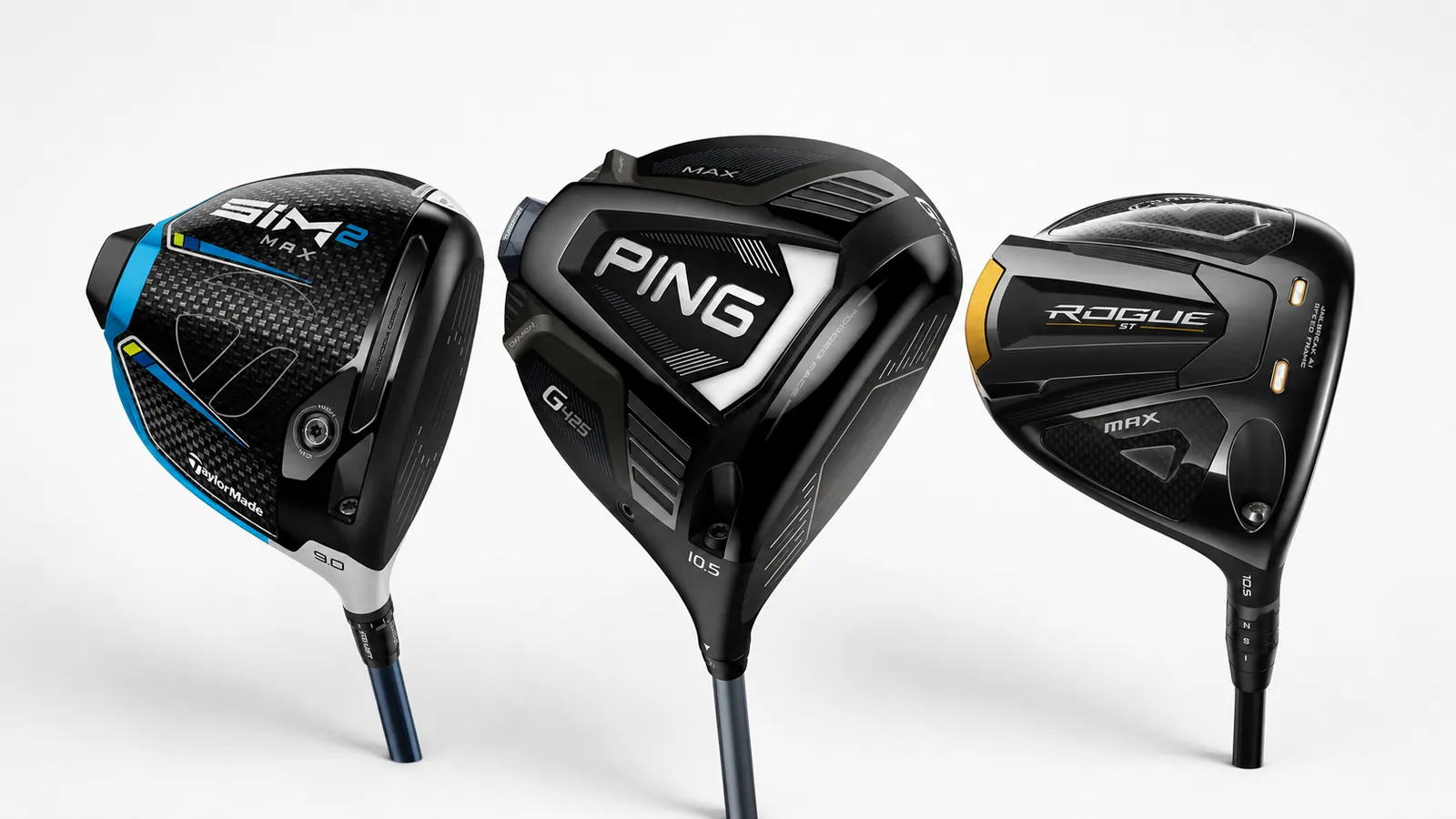
TaylorMade SIM2 Max is the high-launch, easy-to-hit one, and our pick of the three. If you struggle to get the ball in the air, or your driver speed sits below 95 mph, this is the one to look at. It launches mid-to-high by design, the Inertia Generator weighting at the back keeps it forgiving across the face, and the face is built to soften the distance penalty on the off-centre strikes that golf newbies like me make regularly. Owners just describe it as "easy", which doesn't sound exciting until you remember the alternative is "hard".
Ping G425 Max is the one to buy if your bad shots scare you. Ping put a big tungsten weight low and back, so the head is hugely stable and keeps mishits in play, and the movable weight on the sole lets you dial a slice out (or a touch of draw in). It's the most forgiving of the three and about as set-and-forget as a driver gets. You give up a little adjustability versus the Callaway, but for keeping the ball in front of you it's hard to beat at this money.
Callaway Rogue ST Max is the all-rounder that sits between the other two. It's more adjustable than the Ping and more polished-sounding than the SIM2 Max, and with the Tungsten Speed Cartridge low and forward it can hit impressive ball speeds when you find the middle. If you're a mid-handicapper who strikes it reasonably well most of the time but wants insurance on the loose ones, this is a smart pick, and it often comes in cheaper than the other two.
How to choose a used driver
The model on the head matters less than getting fitted for it. If you're saving £200-£300 buying used instead of new, put £80 of that towards a fitting; even a 30-minute session at your local store will get you on the right loft and shaft, and it's the cheapest game improvement going. It's easy to skip, I know, the shiny new club is a lot more fun than the technical bit, but the numbers are where the strokes actually are. Want to see what each of these is going for right now? Browse the driver shop, or run your numbers in our strike efficiency calculator to see whether your current driver is actually what's holding you back.
Frequently asked questions
Are used drivers worth buying?
For most golfers, yes. Driver tech has barely moved for a few years, so a 2021 or 2022 head gets you almost the same ball speed and forgiveness as the latest release for less than half the price. Buy from a specialist that grades the head, shaft and grip, and put the savings towards a fitting or lessons.
How much should you spend on a used driver?
You don't need to spend big. The sweet spot is around £150 to £250, where recent game-improvement heads land once they are two or three years old. Spending more mostly buys a newer paint job, not meaningful extra performance for an amateur swing.
What loft driver should I get?
Most amateurs are under-lofted. As a rough guide, 10.5 degrees suits the majority of club golfers, and slower or higher-launch swings often do better at 12 degrees. The real answer comes from a launch monitor, which is why a quick fitting is worth more than the model on the head.
What does the CaddyIndex score mean?
CaddyIndex is our 0 to 100 rating for a club, distilled from credible reviews and lab tests across six areas like forgiveness, distance and feel. The three drivers here all score in the high 70s, which is strong for game-improvement heads at this price.