Best fairway woods: forgiving, easy to hit, and three we'd buy
The best fairway woods, rated by CaddyIndex: the most forgiving and easiest to hit off the deck. Three we'd buy across the budget, plus what loft and number to get and fairway wood vs hybrid.
After the driver, the fairway wood is the longest club in the bag, and for a lot of golfers the most frustrating. The best fairway woods take the fear out of it: a wide, low-slung head that launches the ball high and straight off the turf, not just off a tee. Get the right one and it earns its spot: it covers your long par 4s, gives you a real go at par 5s in two, and it's a safer swing than the driver when you just have to find the fairway.
Here's what makes a fairway wood easy to hit, three we'd buy in 2026 across the budget, which loft and number to get, and how a fairway wood stacks up against a hybrid.
What makes a fairway wood easy to hit
- Forgiveness and a low centre of gravity. The whole game. A big, shallow head with the weight set low and back gets the ball airborne off the turf without a perfect strike, and holds its line when you catch it thin or off the toe. This is what separates the easy fairway woods from the ones that punish you.
- The right loft and number. A 3-wood is the longest and the hardest to hit off the deck; a 5 or 7-wood launches higher and is far easier. Most golfers score better with more loft than they think.
- Turf and tee versatility. A good fairway wood is as happy swept off a tight fairway lie as it is teed up on a long par 4, and the best ones are genuinely usable from the rough too.
- Launch over a low-spin badge. A low-spin "Tour" head chases distance for fast, centred strikers, but it robs the average golfer of the height that holds a green. For most players a higher-launch head is longer where it counts.
- Adjustability (optional). Some heads let you tweak loft and lie to fine-tune the gap. Useful, but not essential.
The best fairway woods we'd buy
Picked from the top of our CaddyIndex ratings, kept to wide-appeal heads, and set out across three budgets. Prices move, so tap through for the current best UK price across new and used. Want the full list? Every fairway wood we rate is on the CaddyIndex.
CaddyIndex™
Overall rating
The premium pick. Our top-rated fairway wood: the newest tech and the longest here, with a penetrating flight that rewards a clean strike. Buy it if you want the best and you find the middle often.
CaddyIndex™
Overall rating
The mid-money sweet spot, and our pick. One of the most forgiving fairway woods made, high and easy off the deck, with an adjustable head to dial in your gap. Bought used it costs far less than the flagships, and it's where most golfers should look first.
CaddyIndex™
Overall rating
The budget play, and proof you don't need to spend big. A couple of seasons old but still genuinely forgiving and easy to launch, and used it comes in under a hundred pounds. All the fairway wood a lot of golfers need.
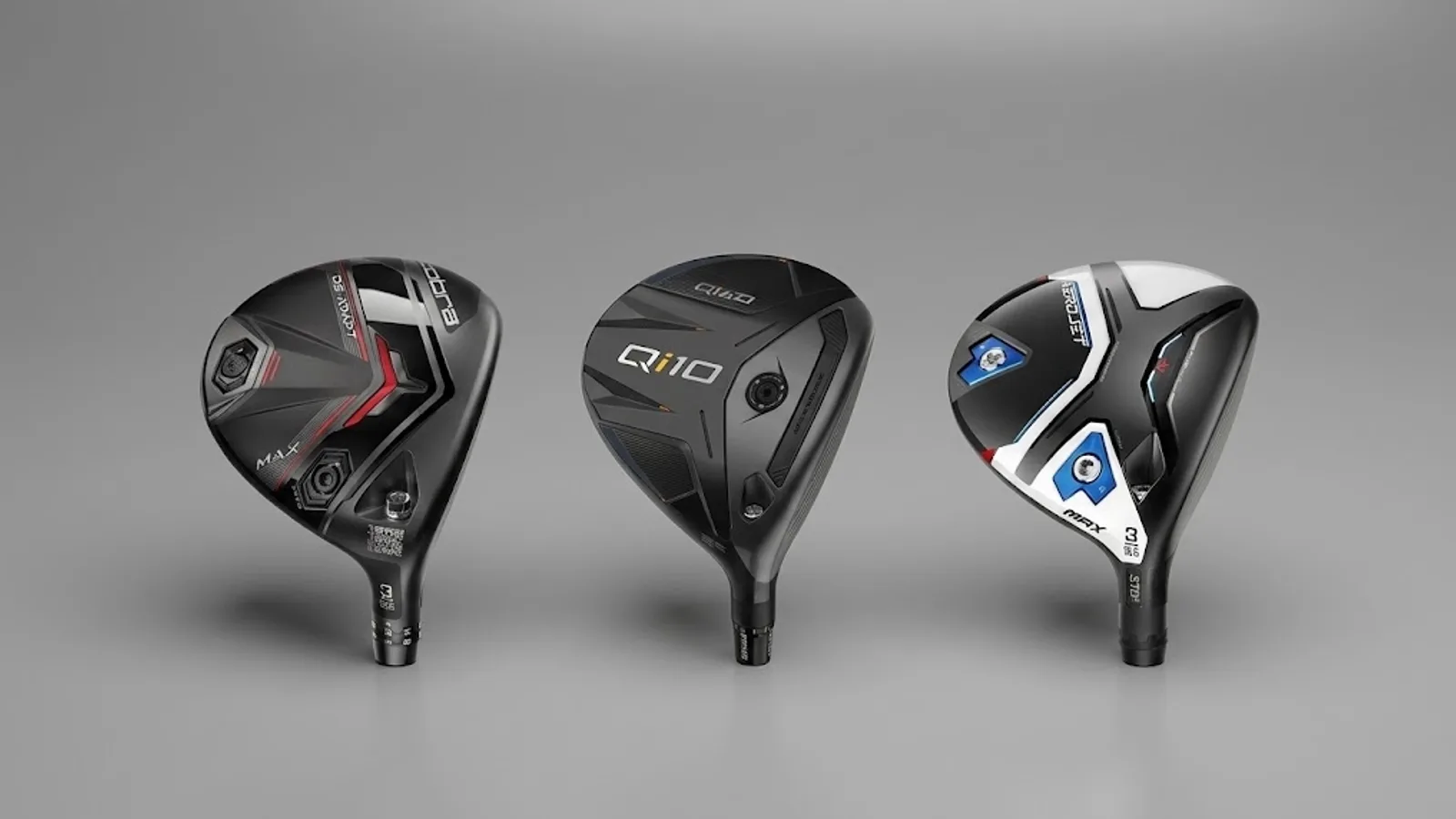
The short version: the Cobra DS-ADAPT Max carries our pick, one of the most forgiving fairway woods made and where most golfers should start at mid-money. The TaylorMade Qi4D is the premium play, our top-rated fairway wood and the longest here, best for the confident striker. The Cobra Aerojet is the budget buy, a couple of seasons old but still forgiving and easy, and under a hundred pounds used.
Which fairway wood do you need? (3, 5 or 7-wood)
Pick by the gap you need to fill and how easily you get the ball in the air. As a rough guide:
| Fairway wood | Typical loft | Rough carry | Best for |
|---|---|---|---|
| 3-wood | 15° | 215 to 235 yd | Off the tee and the longest approaches. The most distance, the hardest to hit off the deck. |
| 5-wood | 18 to 19° | 195 to 215 yd | The easy-to-hit all-rounder. Launches higher off the turf than a 3-wood, so most golfers hit it better. |
| 7-wood | 21 to 22° | 180 to 200 yd | High, soft and forgiving. Replaces a long iron or hybrid and holds greens. A rising favourite. |
| 9-wood | 24° | 165 to 185 yd | Steep launch that stops fast. Niche, but one of the easiest clubs to hit from a poor lie. |
Rough averages for a mid swing speed; your numbers will differ.
Yours will differ, so plug your own distances into the club gapping calculator to see which one fills your gap. If you find a 3-wood hard to hit off the deck, a 5 or 7-wood is almost always the smarter buy.
Fairway wood vs hybrid vs driving iron
They overlap, so it comes down to distance, launch and the lie you play from.
- Fairway wood flies the furthest and launches the highest, and it's the best of the three for reaching a long par 5 or hitting a safe long tee shot. The long shaft and big head make it the hardest to control from a bad lie.
- Hybrid is shorter and more controlled than a wood, far easier to hit from the rough or a tight lie, and the better long-iron replacement. Our best hybrids guide covers the top picks.
- Driving iron gives the lowest, most workable flight and the most control off the tee in wind, but it's the hardest to hit well and really suits lower handicappers.
Most golfers carry one fairway wood and one or two hybrids to bridge the gap between driver and irons. Let your gapping decide the mix.
How we picked these
Every club in our CaddyIndex carries a score synthesised from third-party reviews and lab-test data and rated across six areas. We ranked the fairway woods by their overall rating, then did the parts a raw ranking can't: we favoured the wide-appeal, forgiving heads over narrow Tour models, spread the picks across brands and three budgets, and sense-checked each against what reviewers say it suits. The result is three fairway woods that genuinely help most golfers, not just the lowest handicaps.
Buying a fairway wood: what to check
- Get the loft and number right. Use the table above and fill the gap you actually have. A 5 or 7-wood is easier to hit than a 3-wood and, for most golfers, more useful.
- Check your gapping first. Add a fairway wood where there's a hole between your driver and your longest reliable iron or hybrid. The club gapping calculator shows you where.
- Favour launch over a low-spin badge. Unless you swing fast and find the centre, a higher-launch head holds greens and flies further than a "Tour" or "LS" model.
- Buy last year's flagship. Fairway woods change little year to year, so a one-season-old head bought used or like-new is often the smartest money in the bag.
Frequently asked questions
What is a fairway wood, and what is it used for?
A fairway wood is a large, rounded-headed club with more loft than a driver, numbered by how much loft it has: a 3-wood is the lowest and longest, then a 5, 7 and 9-wood climb in loft and get easier to hit. It is built to hit the ball a long way off the ground, from the fairway or the rough as well as off a tee. Most golfers use one to cover long approach shots, to reach par 5s, and as a safer alternative to the driver off a tight tee.
Which is the most forgiving fairway wood, and are they hard to hit?
A fairway wood is one of the trickier clubs to hit off the deck because of its low loft and long shaft, but the forgiving, high-launch models make it far easier. Look for a wide, shallow head with the weight set low and back, usually the brand's 'Max' model, which gets the ball airborne without a perfect strike and holds its line on mishits. The CaddyIndex ratings above rank the most forgiving heads, and going up a number to a 5 or 7-wood makes any fairway wood easier still.
What loft fairway wood should I get?
Match the loft to the gap you need and how easily you launch the ball. A 3-wood is around 15 degrees, a 5-wood 18 to 19, a 7-wood 21 to 22, and a 9-wood about 24, with each step up launching higher and landing softer. If you struggle to get a 3-wood airborne off the fairway, drop to a 5 or 7-wood; most golfers hit those better and lose little real distance. The club gapping calculator shows exactly which loft fills your gap.
Do I need a 3-wood, a 5-wood or a 7-wood?
It depends on the gap between your driver and your longest reliable iron or hybrid, and how easily you launch the ball. A 3-wood suits players who want maximum distance and can sweep it cleanly off the turf or a tee. A 5-wood is the easiest all-rounder and the one most golfers should own. A 7-wood launches highest and stops fastest, and it has become a popular, easier replacement for a long iron. Many golfers carry a 5-wood plus a hybrid rather than a hard-to-hit 3-wood.
Fairway wood or hybrid, which should I use?
It comes down to distance and the lie. A fairway wood flies further and launches higher, and it is the better club for reaching a long par 5 or a safe long tee shot. A hybrid is shorter, more controlled and much easier from the rough or a tight lie, and it is the better long-iron replacement. Many golfers carry one of each, say a 5-wood and a 4-hybrid, to bridge the gap between driver and irons.
Is a 5-wood easier to hit than a 3-wood?
For most golfers, clearly yes. A 5-wood has more loft and a slightly shorter shaft than a 3-wood, so it launches the ball higher off the turf and is more forgiving of a less-than-perfect strike. You give up a little distance but gain height, consistency and a club you will actually hit well from the fairway. If you rarely hit your 3-wood off the deck, a 5 or 7-wood is the smarter buy.
Are expensive fairway woods worth it, or should I buy used?
For most golfers, last year's flagship bought used or like-new is the smart play. Fairway woods change little from season to season, so a one-year-old head is nearly identical to the current model and often costs a good deal less. Spend up for the newest head only if you want the latest face tech and the small distance gain that comes with it. A well-rated budget or prior-generation model, like the value pick above, gives most golfers all the forgiveness and launch they need.
Who makes the best fairway woods?
There is no single best maker; the right one depends on the loft you need and how forgiving you want the head. The brands that consistently rate highest in our CaddyIndex are TaylorMade, Ping, Titleist, Callaway and Cobra, and the picks above span the top of them. Choose by fit, forgiveness and price rather than the badge.
See every fairway wood we rate on the CaddyIndex, or browse live UK prices on the fairway wood shop page. For more in this series, see our other buying guides.